AMARI Marks 10 Years of Advancing Mental Health Research in Africa
By Amos Batisayi
Over the past ten years, the African Mental Health Research Initiative (AMARI-II) has grown from a vision into a continent-wide network transforming mental health research and leadership in Africa. From a single hub to three regional hubs covering eight African countries, the initiative has advanced research, training, and policy in unprecedented ways.
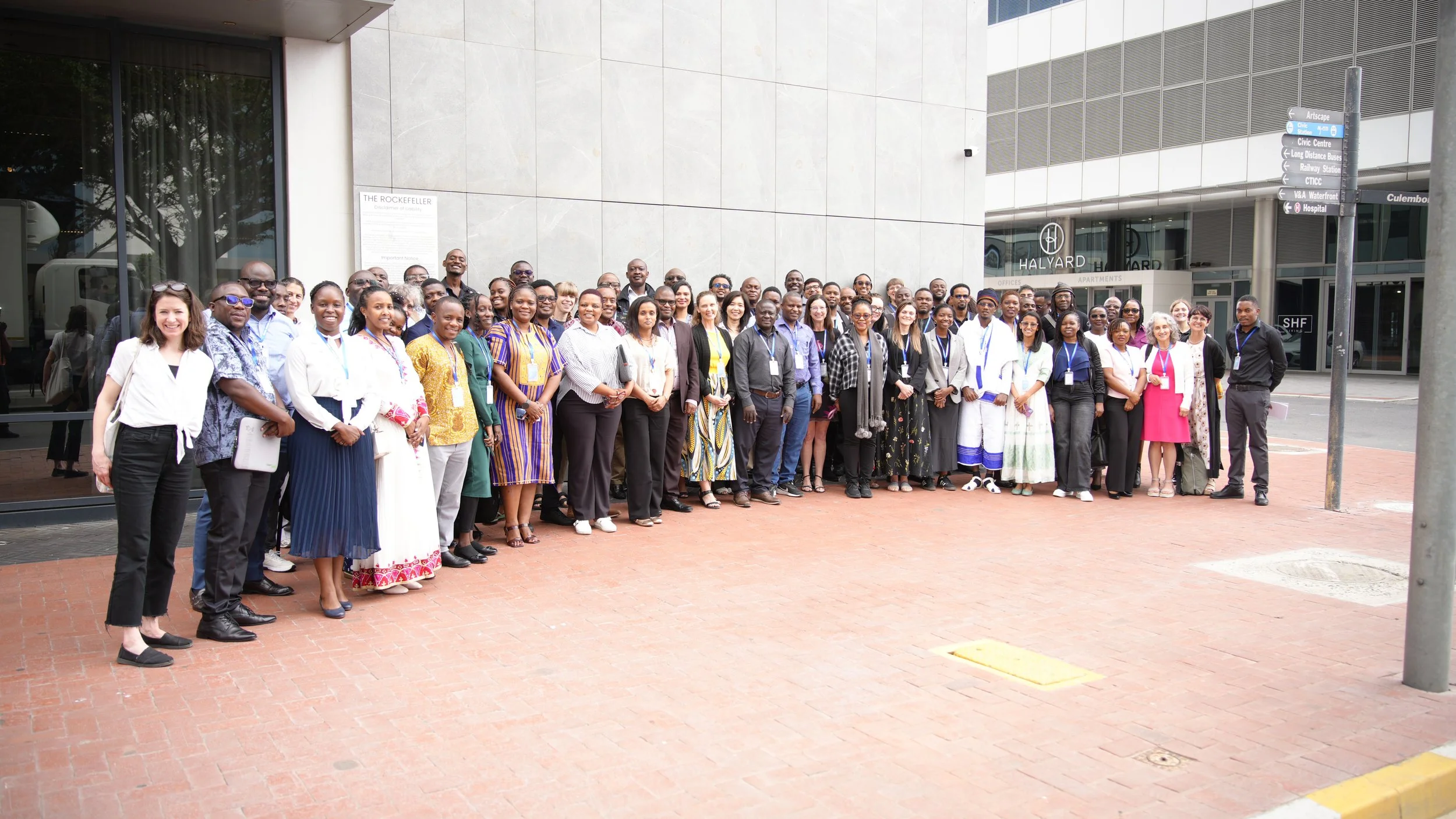
There was a quiet sense of reflection and pride as more than 80 global mental health experts, researchers, and PhD students gathered in Cape Town for the AMARI-II Annual Scientific Meeting, which coincided with AMARI’s 10th anniversary celebration.
The meeting was held under the theme “Celebrating a Decade of Research Excellence in African Mental Health Research”.
Opening the Annual Scientific meeting, Programme Director Professor Dixon Chibanda reflected on AMARI’s beginnings from its early days, including its first scientific gathering in Victoria Falls, to what has now become a mature, influential network. The contrast was clear: what started as a small, ambitious convening has evolved into a vibrant, pan-African platform with global reach.
“What began as a collaborative effort has evolved into something that is truly African-led,” Professor Chibanda told delegates.
PhD fellows were given the platform to present their research, and the difference from their 2024 presentations was clear. There was a noticeable difference in how they articulated their research projects. The work itself showed greater depth, but just as evident was the role of consistent mentorship and supervision behind the scenes.
Beyond presentations, the meeting created space for meaningful engagement. Fellows had the opportunity to network with established researchers from both the global North and South, strengthening relationships that continue to shape research careers and collaborations. These interactions underscored one of AMARI’s core strengths: building bridges between emerging African researchers and well-established global mental health networks.
University of Cape Town Vice Chancellor, Professor Mosa Moshabela, who was the Guest of Honour, engaged directly with the fellows, moving beyond formal remarks into conversation. He spoke about the importance of relationships in professional networks, which often shape the direction and impact of a research career. He encouraged the fellows to be deliberate about building connections that last, pointing out that while technical expertise matters, it is the relationships formed over time that open doors, sustain collaboration, and ultimately carry research further.
Professor Soraya Seedat, a Professor of Psychiatry and Executive Head of the Department of Psychiatry at Stellenbosch University in South Africa, highlighted the rapid increase in scientific publishing. The systems for assessing papers are struggling to keep up with this rise. Researchers now face a complex landscape involving open access fees, preprint servers, predatory journals, and AI in writing. She emphasised that publishing is not just about productivity but also about credibility and impact. Researchers should be intentional about where they publish and prioritise quality over quantity while taking peer review seriously.
Speaking after the Scientific Meeting, the University of Zambia, institutional lead Dr Paul Ravi said the AMARI-II programme represents a significant step for the country, as it will produce Zambia’s first cohort of locally trained psychiatrists. He noted that this group is expected to play a pivotal role not only in strengthening mental health services, but also in training the next generation of psychiatrists in Zambia, helping to build long-term capacity within the country’s health system.
Speaking at the conference, Claire van der Westhuizen, an Assistant Professor at the University of Cape Town and an alumna of AMARI-I, discussed how the program positively impacted her career. She noted that the mentorship and support she received opened up new opportunities and now informs her role as the UCT institutional lead. Prof Van der Westhuizen emphasised her commitment to creating similar opportunities for others in public mental health training. She also mentioned the strengthening South–South collaboration among fellows and AMARI's growing influence in UCT's academic work.
One of the clearest signs of AMARI-II’s shift is the transformation of the Academic Competencies Enhancement Series (ACES). Once exclusively delivered by the programme’s UK partner institution - King’s College London, the programme is being successfully transferred to Africa and is now delivered by alumni from AMARI-I, with former fellows now serving as trainers and mentors for the current PhD cohort.
To date, the programme has trained over one hundred (100) Master’s, PhD, and postdoctoral fellows, developing mental health researchers across Africa. Currently, 61 fellows are actively supported, demonstrating AMARI’s ongoing commitment to long-term capacity strengthening.
AMARI has evolved into a dynamic, borderless network with a footprint spanning nine African countries, three regional hubs across East, West, and Southern Africa, with strategic partnerships with King’s College London and the London School of Hygiene and Tropical Medicine as collaborators in the United Kingdom.
AMARI is strengthening local academic programmes. The University of Zimbabwe has introduced an MPhil in Public Mental Health, which marks a significant step in embedding mental health training within African institutions, pointing to a future where local universities serve as hubs of expertise, producing professionals equipped to address challenges within their own communities.
AMARI-I alumni are increasingly stepping into leadership roles across Africa. Many now serve as lecturers, supervisors, and research leads within universities. Others are contributing to policy development, helping to shape national and regional mental health strategies.
The programme has deliberately combined academic training with mentorship, leadership development, and opportunities for collaboration. The result is a growing cohort of researchers who are not only skilled but also prepared to lead.
There is also a strong sense of continuity. Alumni are not leaving the programme behind; they are returning to it in new roles. Some co-deliver training programmes, others mentor current PhD fellows, while postdoctoral researchers are increasingly taking on leadership roles in major research projects, including internationally funded initiatives.